Education library
Resources
Everything worth reading before you talk to a provider: the full guide, a beginner's path through our education, practical handling basics and the published research behind the major compounds.
The peptide guide
Beginner's start here
Five links, in order. About fifteen minutes end to end.
1. What peptides actually are
Short chains of amino acids and why that matters. Plain language, no jargon.
Read2. How they work in the body
Signalling, receptors and why a peptide is more like a message than a fuel.
Read3. Match a goal to a category
Three questions that point you to the right area to research and discuss.
Read4. Powder vs liquid
What arrives in the box, what you mix and what stores longer.
Read5. How these are made and tested
503A vs 503B pharmacies, third-party testing and what we can't promise.
Read
Reconstitution & storage basics
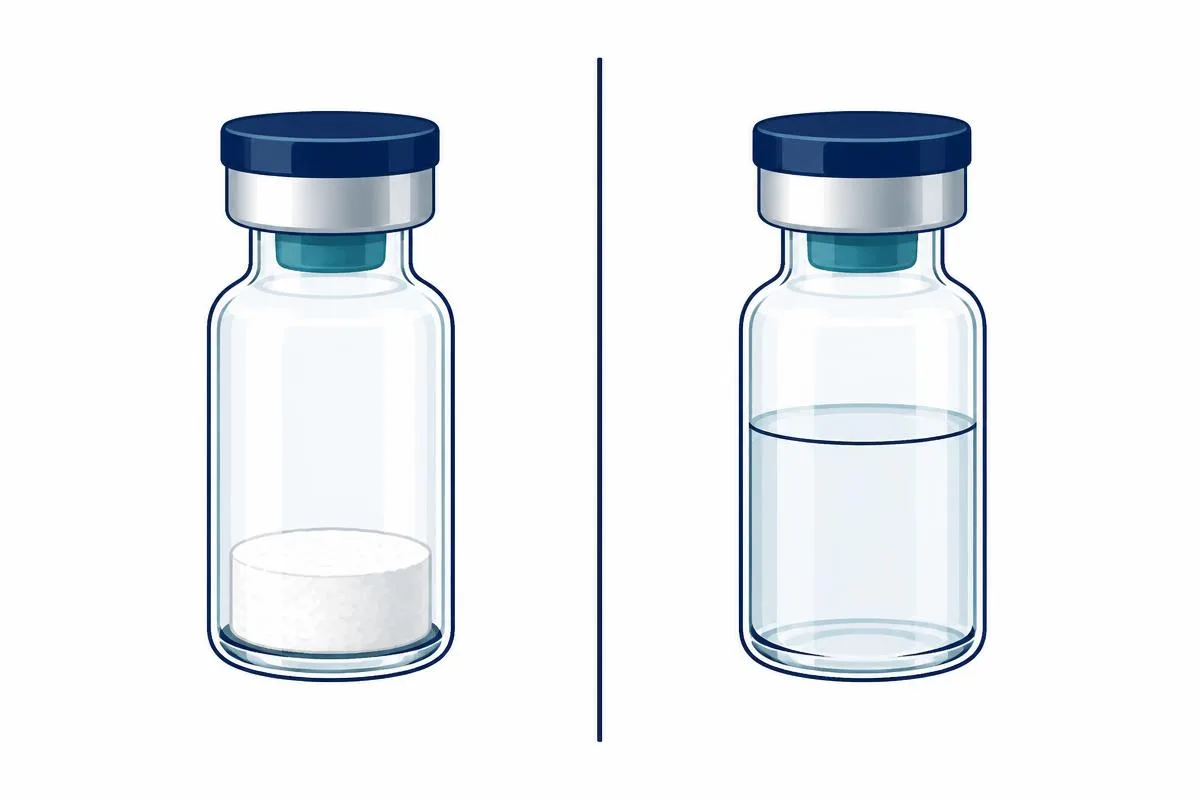
Many peptides ship as a freeze-dried powder because dry powder is far more stable in transit than liquid. Before use, the powder is reconstituted — mixed with a sterile diluent, usually bacteriostatic water, which contains a small amount of benzyl alcohol so the vial can be entered more than once.
General handling principles. Work on a clean surface with clean hands. Wipe the rubber stopper with an alcohol swab and let it dry. Add the diluent slowly down the inside wall of the vial rather than directly onto the powder — peptides are fragile and forceful streams or shaking can damage them. Swirl gently, or simply let the vial sit, until the solution is clear. Never shake.
Storage. Sealed lyophilized powder is typically kept refrigerated at roughly 2–8 °C, and many products tolerate short periods at room temperature during shipping. Once reconstituted, vials are refrigerated and protected from light. Do not freeze a reconstituted vial.
Shelf life. Sealed powder generally lasts far longer than mixed solution; a reconstituted vial has a much shorter usable window. Your pharmacy label is the authority — it carries the beyond-use date for your specific preparation, and it overrides anything on this page.
This section covers general handling only. It does not include dosing, volumes or dilution ratios. Those come from your prescribing provider and the pharmacy label — follow those instructions, not the internet.
Injection basics
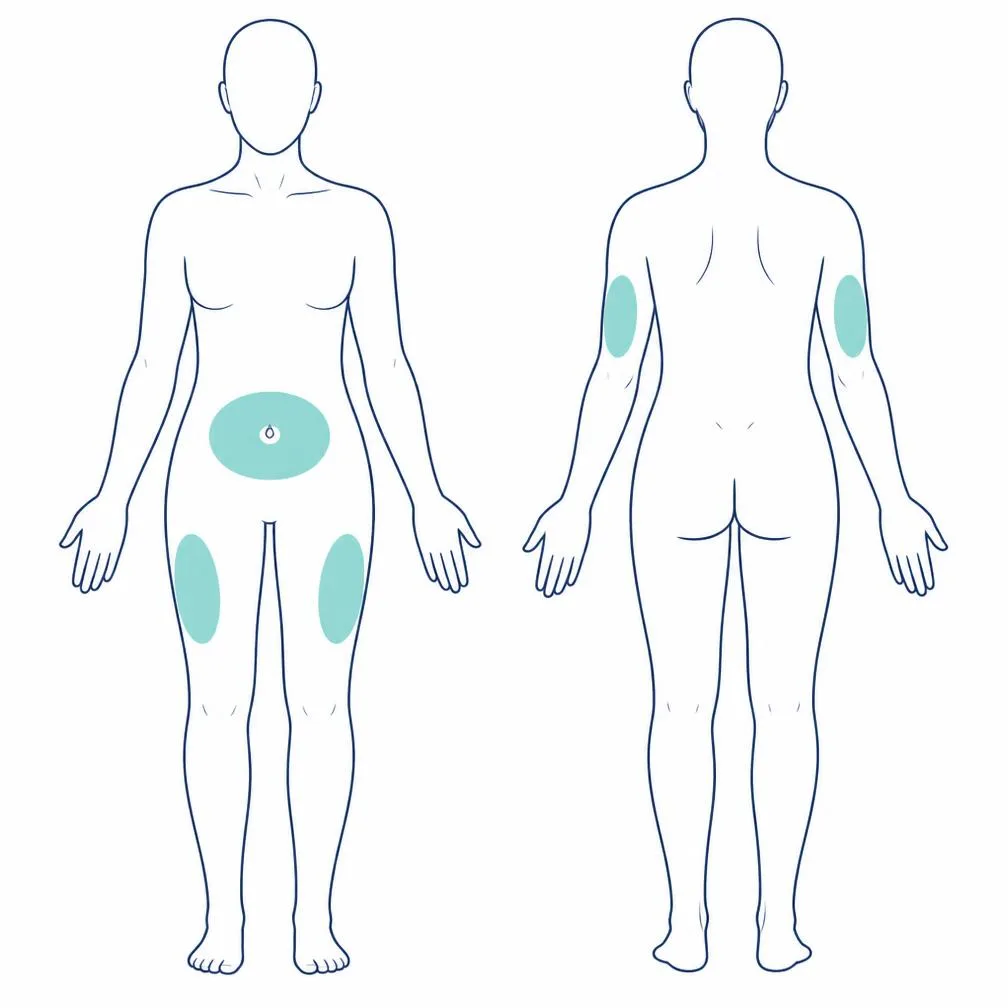
Subcutaneous means under the skin — into the fat layer, not the muscle. It uses a short, fine needle and is the most common route for the peptides on this site.
General technique. Wash your hands. Clean the site with an alcohol swab and let it air dry. Gently pinch a fold of skin, insert the needle at the angle your provider specified, deliver slowly, then release the fold and withdraw. Apply light pressure with clean gauze — don't rub.
Site rotation. Using the same spot repeatedly can cause lumps, bruising and hardened tissue that changes how the medication is absorbed. Move at least an inch from your last site each time and keep a simple written rotation so you don't drift back to a favourite spot.
Sharps disposal. Never reuse a needle and never put one in household trash or recycling. Use an FDA-cleared sharps container, or a heavy-duty plastic container with a tight lid if that isn't available. Disposal rules vary by state — check your state's household sharps program for drop-off sites or mail-back options.
This is general technique education, not instruction for your specific prescription. No doses appear on this page. Your provider and pharmacy give you the instructions that apply to you, and you should ask them if anything is unclear.
References & published research
We'd rather you read the literature than take our word for it. These links go to PubMed and ClinicalTrials.gov searches for the major compounds. Research volume and quality vary widely between compounds — some are backed by large randomized trials, others by early or animal-only work.
- SemaglutidePubMed — semaglutide clinical literature
- SemaglutideClinicalTrials.gov — semaglutide studies
- TirzepatidePubMed — tirzepatide clinical literature
- TirzepatideClinicalTrials.gov — tirzepatide studies
- RetatrutideClinicalTrials.gov — retatrutide studies
- BPC-157PubMed — BPC-157 research
- TB-500 / Thymosin beta-4PubMed — thymosin beta-4 research
- SermorelinPubMed — sermorelin research
- Ipamorelin / CJC-1295PubMed — ipamorelin research
- NAD+PubMed — nicotinamide adenine dinucleotide research
- GlutathionePubMed — glutathione research
- PT-141 / BremelanotidePubMed — bremelanotide research
- Thymosin alpha-1PubMed — thymosin alpha-1 research
Ready to begin?
Start through the secure consultation workflow when the intake link becomes active.
Treatment is only available if determined medically appropriate by a licensed provider.